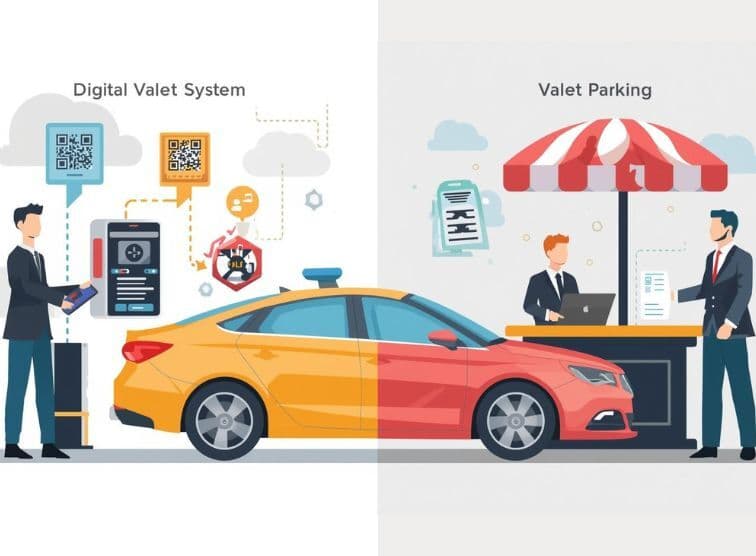
Compare digital vs traditional valet parking systems and discover which is better for your business in terms of efficiency, cost, and customer experience.

Manu
March 18, 2026
Introduction to Valet Parking Systems
Valet parking has long been a symbol of convenience and premium service, especially in hotels, malls, and high-end commercial spaces. However, with the rise of smart technology, businesses now face an important choice: stick with traditional valet parking or switch to a digital valet parking system.
Understanding the differences between these two approaches can help you make the right decision for your operations, customer experience, and long-term growth.
What Is Traditional Valet Parking?
Traditional valet parking is the classic system where customers hand over their car keys to a valet attendant, receive a paper ticket, and wait for their vehicle to be retrieved when needed. This method relies heavily on manual processes, human coordination, and physical tracking systems.
While it has worked effectively for decades, traditional valet parking often involves challenges such as lost tickets, longer wait times, and limited visibility into operations.
What Is Digital Valet Parking?
Digital valet parking is a modern solution that uses technology to streamline the entire parking process. It replaces paper tickets with digital tokens, often managed through SMS, mobile apps, or QR codes. Customers can request their vehicles remotely, track status updates, and enjoy a seamless experience.
For businesses, digital valet systems provide real-time dashboards, analytics, and automation features that improve efficiency and control.
Key Differences Between Digital and Traditional Valet Parking
Technology and Automation
Traditional valet systems rely on manual logs and physical tickets, which can be prone to errors. In contrast, digital valet parking uses cloud-based platforms, automation, and mobile integration to simplify operations and reduce human error.
Customer Experience
With traditional valet, customers often have to wait in line and keep track of paper tickets. Digital valet enhances the experience by allowing users to request their car via phone, receive notifications, and avoid unnecessary waiting.
Efficiency and Speed
Digital systems significantly improve speed by optimizing vehicle retrieval processes. Valets receive instant alerts, and workflows are streamlined. Traditional systems, on the other hand, can slow down during peak hours due to manual coordination.
Cost and Operational Expenses
Traditional valet parking involves higher recurring costs due to staffing needs and inefficiencies. Digital systems may require initial investment but often reduce long-term operational costs through automation and better resource management.
Security and Vehicle Tracking
Paper tickets can be lost or duplicated, leading to potential security risks. Digital valet systems offer secure tracking, digital logs, and better accountability for every vehicle handled.
Benefits of Traditional Valet Parking
Despite its limitations, traditional valet parking still offers some advantages:
For smaller businesses or locations with low traffic, traditional valet may still be a practical option.
Benefits of Digital Valet Parking
Digital valet parking brings several modern advantages that align with today’s customer expectations:
These benefits make digital valet systems particularly appealing for businesses aiming to provide a premium and tech-driven experience.
Challenges of Traditional Valet Systems
Traditional valet parking comes with several drawbacks:
These challenges can impact customer satisfaction and operational efficiency, especially in high-traffic environments.
Challenges of Digital Valet Systems
While digital valet parking offers many advantages, it also has a few considerations:
However, these challenges are typically short-term and can be managed with proper planning and onboarding.
Use Cases: Which Businesses Benefit Most?
Hotels and Resorts
Luxury hotels benefit greatly from digital valet systems as they enhance guest experience and reduce wait times, especially during peak check-in and check-out hours.
Hospitals and Healthcare Facilities
Hospitals require efficient and stress-free parking solutions. Digital valet helps reduce congestion and improves service for patients and visitors.
Shopping Malls and Retail Spaces
High foot traffic makes digital valet ideal for malls, where quick vehicle retrieval and smooth operations are essential.
Corporate Offices and Smart Buildings
Modern office spaces prefer digital solutions to align with smart building infrastructure and provide a seamless experience for employees and visitors.
Cost Comparison: Digital vs Traditional Valet Parking
At first glance, traditional valet parking may seem more affordable because it doesn’t require advanced technology. However, hidden costs such as inefficiencies, higher staffing needs, and operational errors can add up over time.
Digital valet parking involves an upfront investment in software and setup, but it reduces long-term costs through automation, better resource allocation, and improved efficiency.
Future Trends in Valet Parking Technology
The valet parking industry is rapidly evolving with advancements such as:
Digital valet parking is at the forefront of these trends, making it a future-ready choice for businesses.
How to Choose the Right Valet Parking System for Your Business
Choosing between digital and traditional valet parking depends on several factors:
Carefully evaluating these factors will help you make an informed decision.
Conclusion
Both digital and traditional valet parking systems have their place in the industry. Traditional valet offers simplicity and familiarity, making it suitable for smaller operations.
However, digital valet parking stands out as the smarter, more efficient, and future-ready solution.
For businesses looking to enhance customer experience, improve efficiency, and stay competitive in a technology-driven world, digital valet parking is clearly the better choice.